

 By Coco
Metal casting is one of the oldest and most important manufacturing processes in the world.
Today, it is widely used by casting manufacturers, suppliers, exporters, and China foundries to produce everything from simple machinery parts to complex aerospace components.
If you are sourcing products or working with a casting factory, understanding the four main types of casting can help you choose the right process, control casting price, and improve product quality.
In this guide, we will explain the four major types of casting in detail:
Sand Casting, Investment Casting, Die Casting, and Permanent Mold Casting.
1. Sand Casting – The Most Widely Used Casting Method

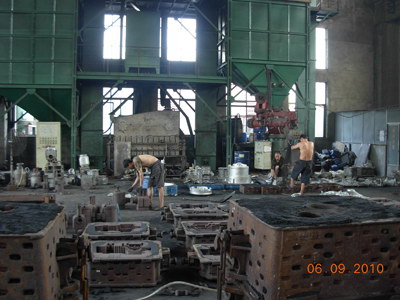

What Is Sand Casting?
Sand casting is the most traditional and commonly used process among casting manufacturers and China foundries. It uses sand molds to form metal parts.
How It Works
- A pattern is placed in sand
- Sand is packed around it to create a mold
- Molten metal is poured into the cavity
- After cooling, the sand mold is broken
Advantages
- Low tooling cost
- Suitable for large and heavy parts
- Flexible for small production runs
- Widely available from global suppliers
Disadvantages
- Rough surface finish
- Lower dimensional accuracy
- More machining required
Applications
- Pump housings
- Engine blocks
- Agricultural machinery
- Heavy industrial parts
👉 Best for: Low-cost, large, and simple metal parts
2. Investment Casting – Precision Casting for Complex Parts

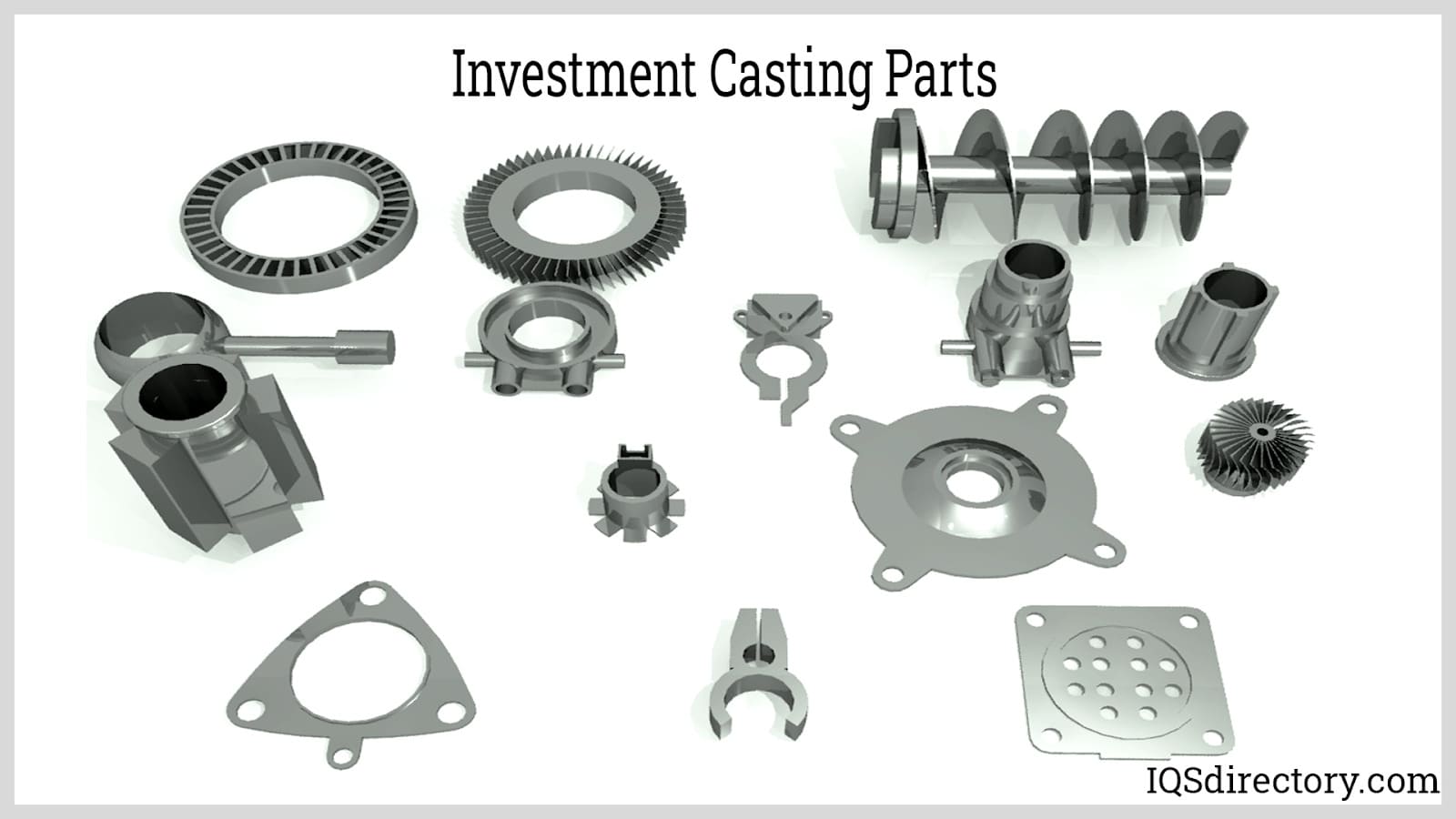
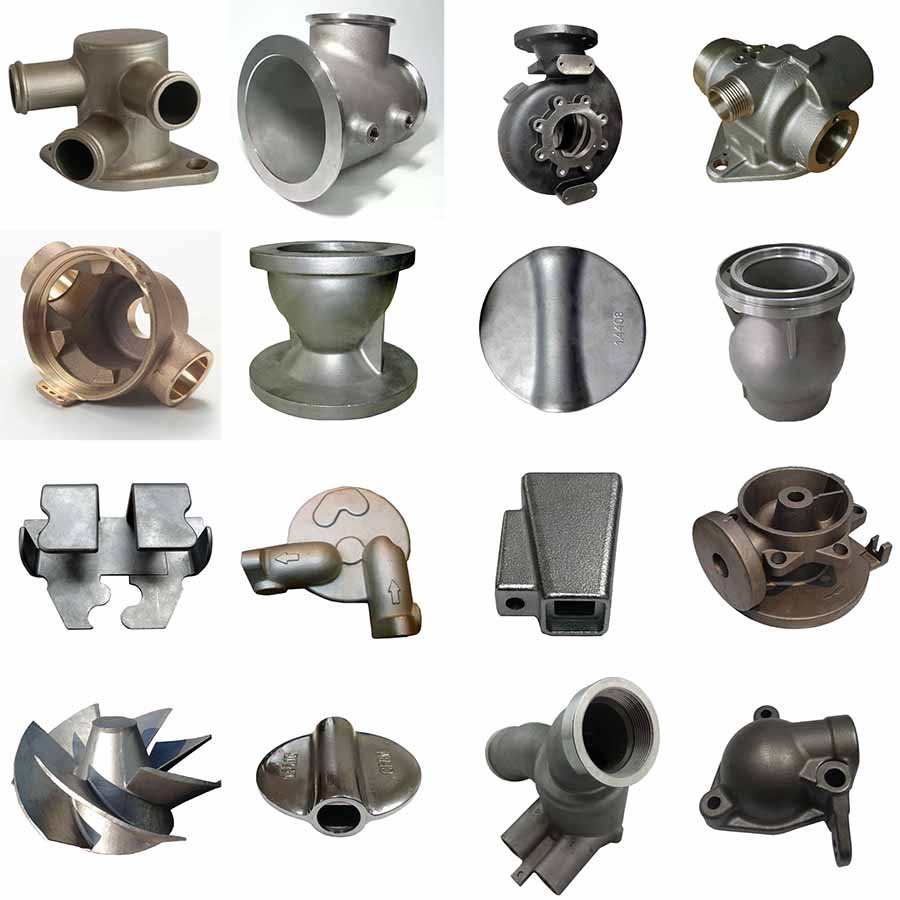
What Is Investment Casting?
Investment casting, also known as lost wax casting, is widely used by high-end casting suppliers and exporters for producing precise and complex parts.
How It Works
- Wax patterns are created
- Coated with ceramic material
- Wax is melted out
- Molten metal is poured into the mold
Advantages
- High precision and tight tolerances
- Smooth surface finish
- Complex geometries possible
- Less machining required
Disadvantages
- Higher casting price compared to sand casting
- Longer production time
- Higher tooling cost
Applications
- Pump impellers
- Valve bodies
- Automotive brake parts
- Aerospace components
👉 Best for: Complex, high-precision parts
3. Die Casting – High-Speed Production Method
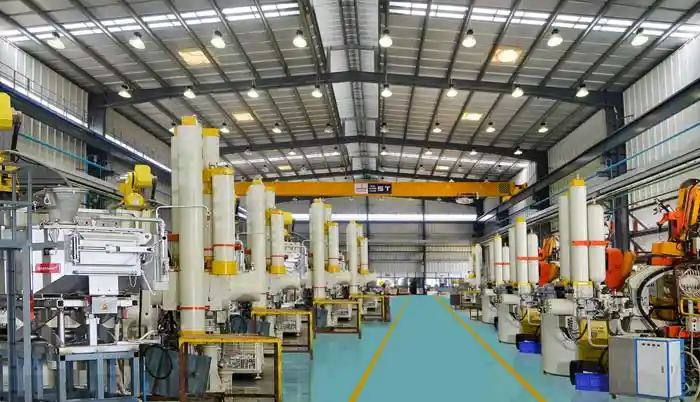


What Is Die Casting?
Die casting is a modern process used by large-scale casting factories and suppliers for mass production. It involves injecting molten metal into a steel mold under high pressure.
How It Works
- Molten metal is injected into a steel die
- High pressure ensures detailed shape
- The mold is reused many times
Advantages
- Very high production efficiency
- Excellent surface finish
- High dimensional accuracy
- Suitable for mass production
Disadvantages
- High tooling cost
- Limited to non-ferrous metals (aluminum, zinc)
- Not suitable for very large parts
Applications
- Automotive parts
- Electronic housings
- Consumer goods
- Hardware components
👉 Best for: High-volume production with consistent quality
4. Permanent Mold Casting – Durable and Repeatable Process
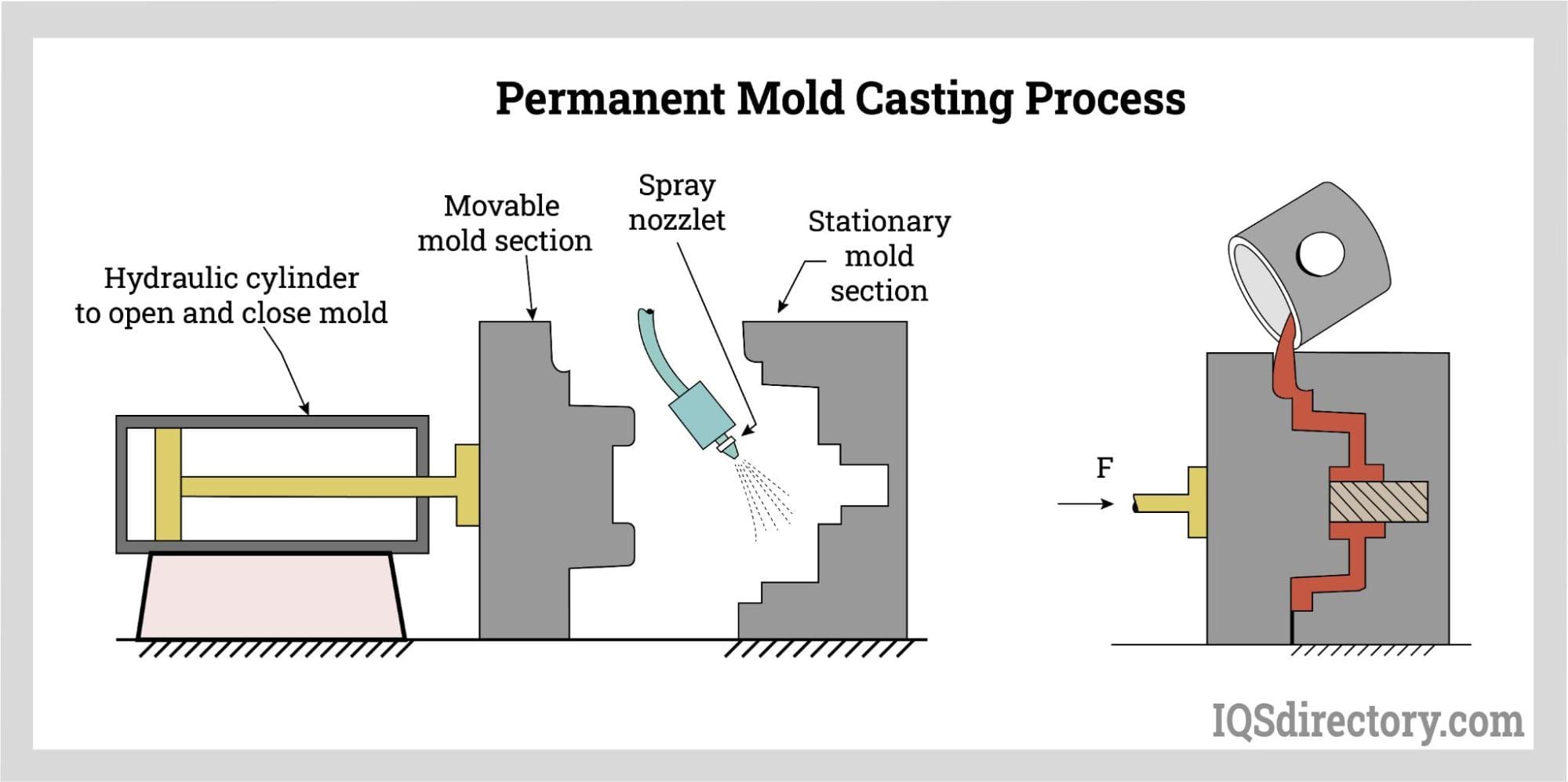


What Is Permanent Mold Casting?
Permanent mold casting uses reusable metal molds instead of sand. Many China foundries and casting exporters use this method for medium-volume production.
How It Works
- Molten metal is poured into a reusable metal mold
- The mold is cooled and reused multiple times
Advantages
- Better surface finish than sand casting
- More consistent quality
- Lower long-term cost
- Faster production than sand casting
Disadvantages
- Higher initial mold cost
- Limited design flexibility
- Not ideal for very complex shapes
Applications
- Aluminum automotive parts
- Industrial components
- Machine housings
👉 Best for: Medium-volume production with stable quality
📊 Comparison of the Four Casting Methods
| Casting Type | Accuracy | Surface Finish | Casting Price | Best For |
|---|---|---|---|---|
| Sand Casting | Low | Rough | Low | Large, simple parts |
| Investment Casting | Very High | Smooth | Medium | Complex precision parts |
| Die Casting | High | Very Smooth | High (tooling) | Mass production |
| Permanent Mold Casting | Medium | Good | Medium | Repeated production |
💰 Casting Price: What Affects Cost?
When working with casting manufacturers, suppliers, or China foundries, the casting price depends on several factors:
1. Material Type
Steel, aluminum, and alloy materials have different costs.
2. Complexity
More complex designs increase production difficulty and cost.
3. Volume
Higher order quantity reduces unit price.
4. Tooling Cost
Processes like die casting and investment casting require molds.
5. Machining and Finishing
Additional processing increases final cost.
🌏 Why Choose China Casting Manufacturers and Suppliers?
China is one of the largest hubs for casting factories, suppliers, and exporters in the world.
Key Advantages
- Competitive casting price
- Large-scale production capacity
- Advanced equipment and technology
- Skilled workforce
- Strong export experience
Many global buyers choose China foundries for long-term cooperation due to stable quality and cost efficiency.
🧠 How to Choose the Right Casting Process
Choosing the right method depends on your product:
Choose Sand Casting if:
- You need low cost
- The part is large and simple
Choose Investment Casting if:
- You need high precision
- The design is complex
Choose Die Casting if:
- You need mass production
- The material is aluminum or zinc
Choose Permanent Mold Casting if:
- You want consistent quality
- Production volume is medium
📌 Conclusion
Understanding the four main types of casting is essential when working with casting manufacturers, suppliers, exporters, and China foundries. Each method has its own advantages, cost structure, and ideal applications.
- Sand casting offers low cost for large parts
- Investment casting provides precision for complex designs
- Die casting ensures high-speed mass production
- Permanent mold casting delivers consistent quality
Choosing the right casting process can help you reduce casting price, improve product performance, and build long-term success in manufacturing and global sourcing.
❓ FAQ: Casting Manufacturers, Suppliers, and Processes
1. What are the four main types of casting?
The four main types are sand casting, investment casting, die casting, and permanent mold casting.
2. Which casting method is the cheapest?
Sand casting is usually the lowest cost option due to simple tooling and materials.
3. Which casting process is the most precise?
Investment casting provides the highest precision and best surface finish.
4. Why choose China casting suppliers?
China suppliers offer competitive price, strong manufacturing capacity, and reliable export services.
5. What is the best casting method for complex parts?
Investment casting is best for complex and detailed metal components.
6. How do I reduce casting price?
You can reduce cost by increasing order quantity, simplifying design, and choosing the right casting process.

Get Premium Casting Products
Join foundryking.com Newsletter to get more information of different premium OEM Casting products in China.


