

 By Coco
Compare the whole molding system rather than choosing a binder by price alone.
Foundry sand binder selection affects mold manufacture, casting defects, cleaning and waste handling. A binder that produces a strong test specimen may still be unsuitable for a particular core geometry or metal-pouring condition. The useful comparison is therefore the performance of the complete sand system through the entire casting route.
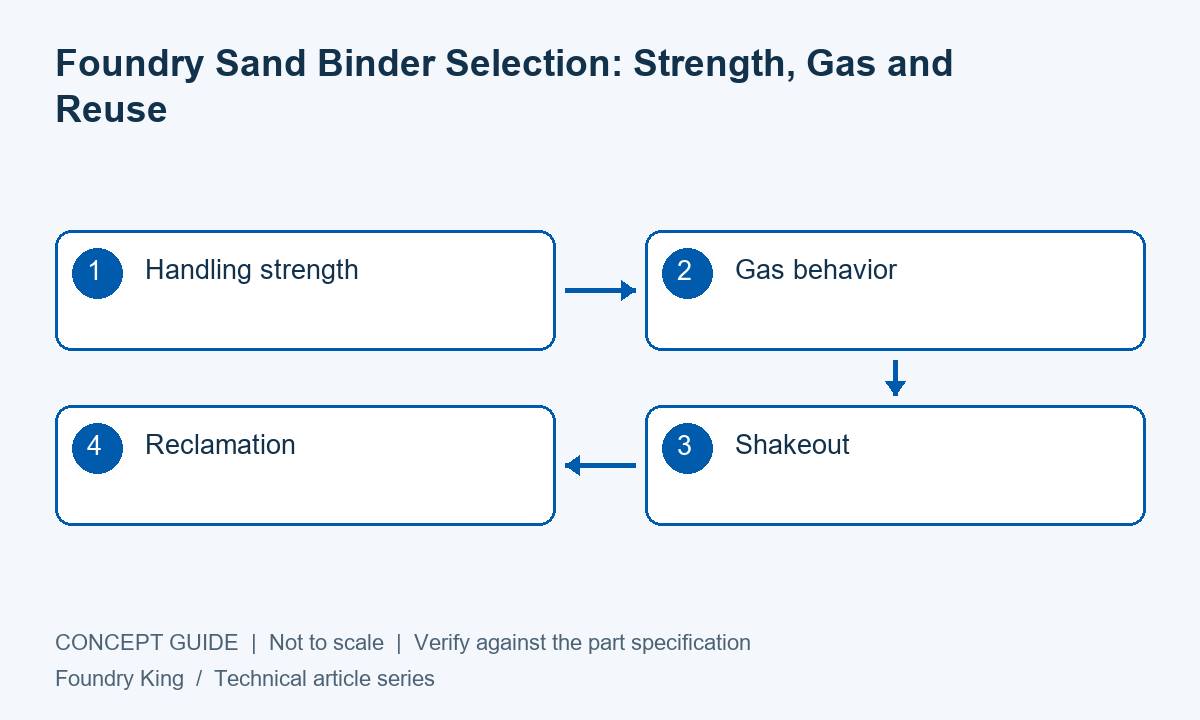
Define what the mold must survive
Start with the alloy, metal temperature range, casting mass and the length of time the mold or core must remain stable. Handling loads and storage conditions also matter. A delicate core transported between workstations faces different requirements from a compact mold made immediately before pouring.
Strength should be considered at the relevant stage. Early stripping strength, storage strength and behavior under thermal exposure are not identical. Ask which tests represent the actual production risks and how out-of-range material is identified before it reaches assembly.
Review working time and curing
Mixing accuracy and the available working window influence how reliably a cavity is formed. An overly short window can cause defects during compaction or assembly; a long stripping time may limit output. Environmental conditions can shift these relationships, so laboratory results need interpretation within the foundry’s operating conditions.
Binder and catalyst choices also interact with sand characteristics. Grain distribution, contamination, reclaimed-sand condition and temperature can affect results. A change in sand supply may therefore need review even when the binder product remains unchanged.
Balance gas release and breakdown
During pouring, binder decomposition and moisture can contribute gases that need a path out of the mold or core. Venting, permeability, coating and filling behavior are all involved. Do not attribute every cavity to the binder without examining the defect location and solidification conditions.
After solidification, the mold and core must be removed without damaging the component. A system that is excellent for handling may complicate shakeout or internal cleaning. This is particularly significant for narrow passages where mechanical access is limited and residual sand is unacceptable.
Consider reclamation as a system cost
| Selection factor | Production consequence | Question for the foundry |
|---|---|---|
| Cure behavior | Available handling and stripping window | How is the process adjusted and checked? |
| Thermal behavior | Gas, expansion and surface interaction | Which trials support this alloy and geometry? |
| Reclamation | Reuse limits and waste processing | What reclaim equipment and controls are in place? |
Validate the change on representative parts
Switching binder systems may affect surface quality, dimensions, gas behavior and cleaning. A useful trial records these outcomes along with mold-making performance. Approval should not rely only on a reduced binder cost per mold if the change increases scrap or finishing labor.
For customers, the foundry normally owns detailed binder recipes. The buyer’s role is to communicate functional requirements, understand significant process changes and request appropriate validation. This preserves the supplier’s process knowledge while maintaining control of the component’s acceptance basis.
Frequently asked questions
Does a lower gas-generating binder eliminate gas defects?
No. Core design, venting, sand condition, metal handling and filling can still contribute to gas-related problems.
Can all reclaimed sand replace new sand?
Reuse depends on the system, reclamation method and required sand properties. The foundry must establish and monitor a suitable balance.
Discuss your component requirements
For related information, review sand casting applications, or review a mold or core requirement. Include the drawing revision, alloy, quantities and critical acceptance requirements so the proposed route can be reviewed against the actual part.

Get Premium Casting Products
Join foundryking.com Newsletter to get more information of different premium OEM Casting products in China.


