

 By Coco
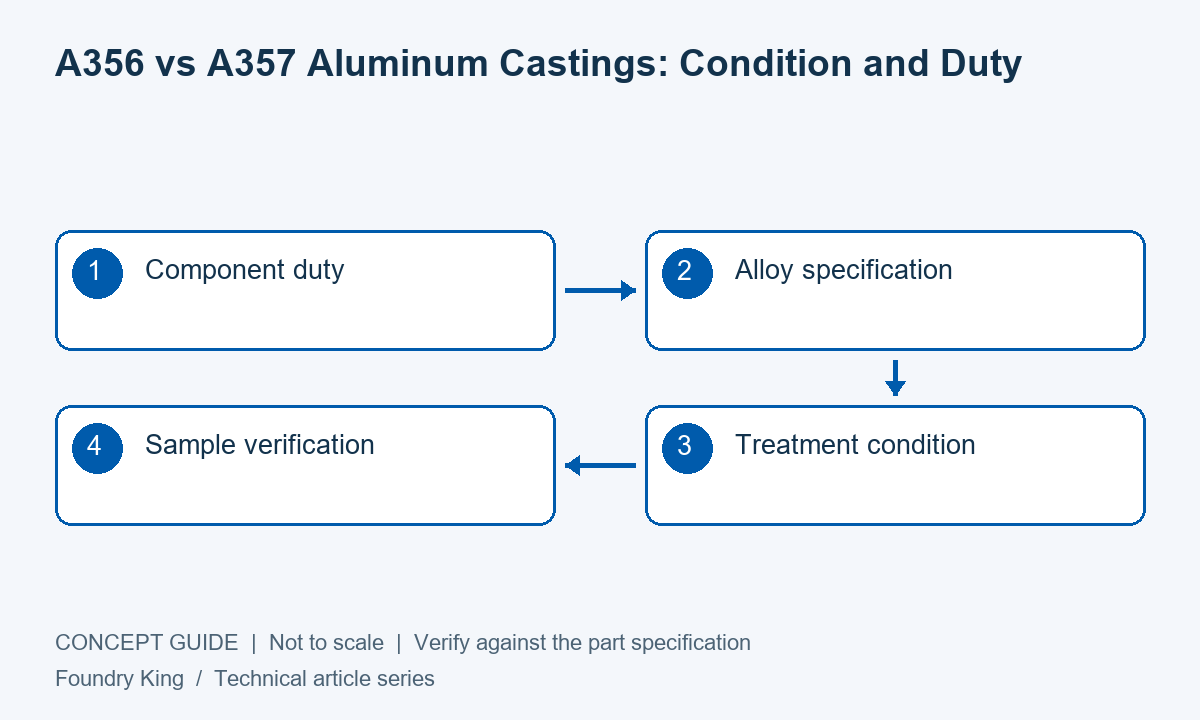
Evaluate the casting and its processing condition as one material choice.
A356 vs A357 is a comparison between aluminum casting alloy designations that should be evaluated with the applicable standard and delivery condition. The alloy name does not define the complete performance of a housing, bracket or impeller. Casting quality, section geometry, heat treatment and the required inspection all influence whether the material suits the component.
Begin with the design requirement
List the required mechanical properties, operating temperature, environment and load case. Include fatigue or impact requirements where they apply. Weight reduction can be a useful goal, but it should not displace stiffness, joint design or the component’s failure consequences.
Use property data that matches the specified product form and condition. Data for a different alloy, process or heat treatment may be useful for orientation but is not acceptance evidence for the supplied casting. The designer should approve the material basis used in the comparison.
Specify the alloy and condition together
Consult the governing material specification for chemistry, processing and test requirements. A comparison based only on nominal composition can miss important differences in required properties or delivery conditions. Avoid treating a familiar temper label as a complete casting order.
If a supplier proposes an alternative route or grade, document the reason and review the complete requirement. A grade selected to achieve a mechanical target may also change process sensitivity or heat-treatment considerations. The proposal should be assessed using the actual component rather than a general claim of higher strength.
Include integrity and machining
Gas-related and shrinkage-related discontinuities can affect aluminum castings independently of nominal alloy selection. Discuss the foundry method, critical sections and the surfaces exposed by machining. The specified material grade does not guarantee that every casting location is sound.
For a sealing or rotating component, define the relevant leak, dimensional or balance requirements. These are component-level checks, separate from the material certificate. Agree the stage at which they are performed so that samples represent the delivered condition.
Compare the whole purchase package
| Review item | Question | Evidence |
|---|---|---|
| Material | Which standard, alloy and condition govern? | Approved specification and certificate |
| Process | How are critical sections filled and fed? | Method review and representative samples |
| Acceptance | What must the finished part demonstrate? | Required test and inspection records |
Manage treatment and repeat supply
Heat treatment can change dimensions as well as properties. Coordinate machining stock, fixturing and final inspection with the selected route. A dimensional result before treatment should not be mistaken for final acceptance where later movement matters.
Retain the approved grade, condition and process requirements for repeat orders. If cost or availability prompts a substitution, obtain engineering approval before manufacture. This maintains a traceable design basis instead of allowing alloy names to become informal purchasing alternatives.
Frequently asked questions
Is A357 always better than A356?
No. Suitability depends on the required properties, casting route, processing condition, geometry and cost of a conforming part.
Does a heat-treated aluminum casting need final dimensional checks?
Where dimensions can be affected or the drawing requires them, verify the component after the relevant processing stages.
Discuss your component requirements
For related information, review aluminum casting applications, or discuss alloy and finished-condition requirements. Include the drawing revision, alloy, quantities and critical acceptance requirements so the proposed route can be reviewed against the actual part.

Get Premium Casting Products
Join foundryking.com Newsletter to get more information of different premium OEM Casting products in China.


