

 By Coco
Treat hydraulic shape and rotating-component acceptance as connected but separate tasks.
An impeller casting review must consider the geometry that moves fluid and the requirements of a rotating component. Blade shape, internal passages, bore alignment and material condition all matter. A casting that reproduces the outer envelope may still need additional inspection, machining and balancing before it can be accepted for assembly.
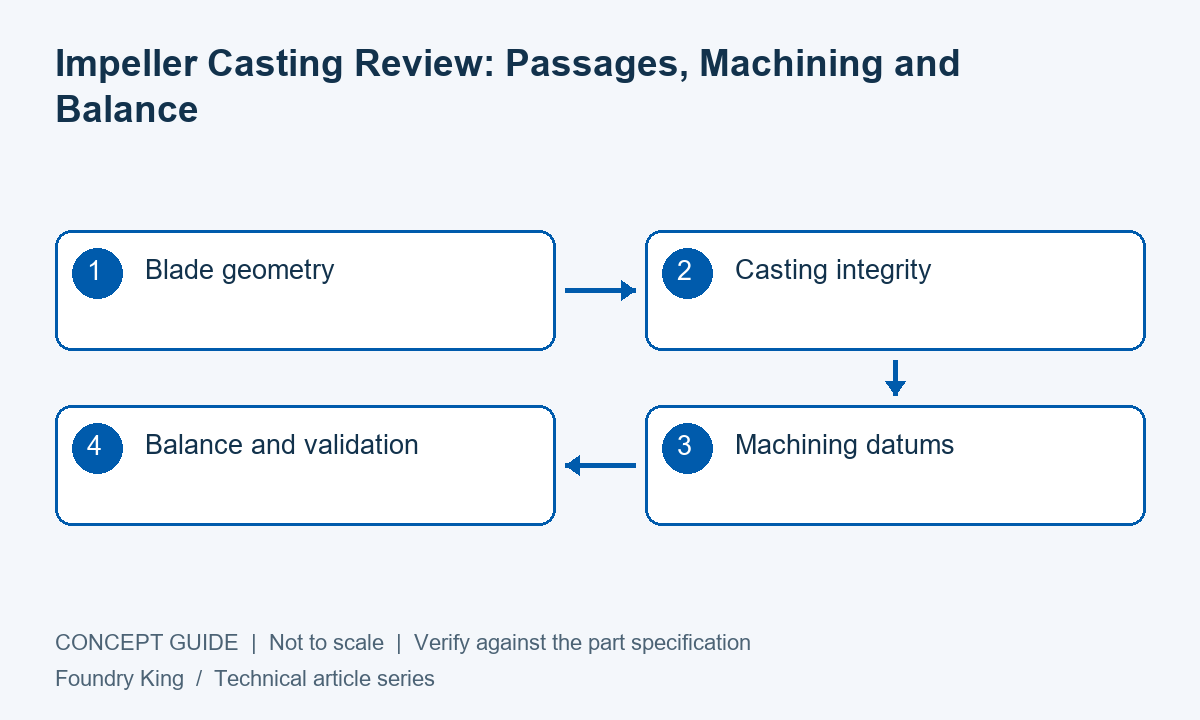
Control the geometry that affects flow
Provide the approved model and drawing revision, including blade and passage requirements. Distinguish nominal hydraulic geometry from dimensions that will be machined. If the foundry proposes changes to improve filling or core support, the equipment designer should review the effect on performance.
For enclosed passages, assess core location and cleanability. Thin sections and abrupt junctions can create different filling and feeding challenges. Inspection should address important internal relationships rather than relying only on the outside diameter and overall height.
Select the material for actual duty
Fluid chemistry, solids, temperature, speed and mechanical loading influence selection. A bronze, stainless or iron impeller family name is not a complete specification. State the required grade, condition and testing, and review substitutions against the original design basis.
Casting integrity can matter independently of the material’s nominal strength. Agree relevant examination and acceptance criteria for critical regions. A polished blade surface is not proof of internal soundness or suitability for every rotational speed.
Plan machining and balancing
Define the bore, hub faces and other datums used to locate the impeller. The machining route must maintain their relationship to the cast geometry. Uneven stock or core displacement can affect the finished wall and mass distribution even when individual machined dimensions pass.
Balancing requirements should state the applicable method and acceptance basis through the design specification. Do not assign a universal balance grade to every impeller. Identify where correction is permitted so that material removal does not compromise blade geometry, strength or corrosion allowance.
Align the acceptance stages
| Stage | Focus | Approval record |
|---|---|---|
| As-cast review | Blades, passages and integrity | Relevant dimensional and examination results |
| Machining | Bore and interface relationships | Finished dimensional report |
| Rotating assembly preparation | Required balance and permitted corrections | Traceable balancing record |
Keep performance claims separate
A cast component supplier can demonstrate the specified geometry and manufacturing acceptance. The complete pump or turbine still needs the relevant hydraulic and mechanical validation. Do not treat casting approval as a guarantee of the assembled machine’s efficiency or operating envelope.
For repeat orders, retain the approved geometry, machining route and balance requirements. A change in gate location, blade finishing or correction method may affect the result. Review these changes instead of allowing them to become undocumented production adjustments.
Frequently asked questions
Does a balanced impeller necessarily have correct hydraulic geometry?
No. Balance and hydraulic shape are different requirements, and both may need verification.
Can balance corrections be made anywhere on the casting?
Only within the approved design and procedure. Uncontrolled grinding can damage a functional or highly stressed region.
Discuss your component requirements
For related information, review rotating casting component examples, or discuss impeller geometry and acceptance. Include the drawing revision, alloy, quantities and critical acceptance requirements so the proposed route can be reviewed against the actual part.

Get Premium Casting Products
Join foundryking.com Newsletter to get more information of different premium OEM Casting products in China.


