

 By Coco
Compare the full casting specification before selecting a valve-body material.
WCB vs WCC cast steel is a specification comparison commonly encountered in pressure-component purchasing. These designations should be interpreted within the applicable casting material standard and the customer’s requirements. A short grade name on a quotation is not enough to establish the complete material, processing or acceptance basis.
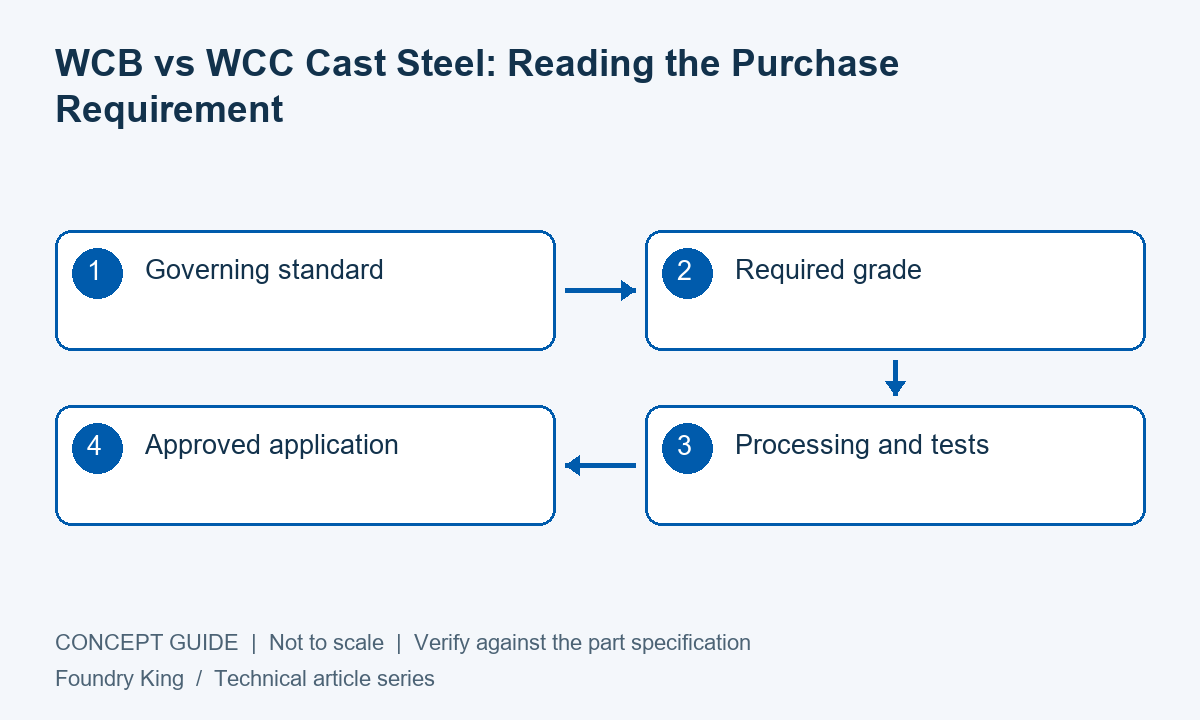
Start with the governing documents
Identify the required standard, grade and applicable revision. Then review any customer supplementary requirements and the equipment’s governing design code. Material selection for a pressure application must remain consistent with that engineering basis, including the permitted service conditions.
Do not select a grade simply because it appears frequently in valve catalogs. A component’s pressure rating and operating limits depend on more than the material name. The qualified designer must evaluate the actual equipment design and applicable requirements.
Compare chemistry and mechanical requirements separately
The relevant standard defines limits and required properties for each grade. Read those provisions directly for the edition being purchased rather than relying on an unsourced comparison chart. Small differences can matter when accepting a heat or reviewing a proposed substitution.
Avoid publishing a universal temperature or pressure rating based solely on WCB or WCC. The final component geometry, code rules, testing and service conditions also apply. A material certificate demonstrates the results it records, not unrestricted approval for every operating duty.
Check condition and testing
Confirm the delivery condition, required mechanical testing and any supplementary examination. Heat treatment and specimen requirements need to follow the applicable specification. A chemistry-only certificate may be insufficient for the purchase requirement.
Where weld repair or other corrective work is permitted, define approval and documentation. The customer may impose conditions beyond the base material specification. Resolve these requirements before ordering rather than asking the foundry to interpret them after a sample fails inspection.
Build a purchase-review checklist
| Item | Question | Evidence |
|---|---|---|
| Grade identity | Does the order specify the intended WCB or WCC grade? | Approved material specification |
| Conformity | Which properties and tests are required? | Traceable certificate and reports |
| Application | Is the grade acceptable for the equipment design? | Designer or code-based approval |
Control substitutions and traceability
If the supplier proposes changing between grades, request a written comparison against the complete requirement and obtain the necessary approval. Do not assume that a seemingly higher nominal property makes the substitution automatically acceptable.
Maintain heat identity through machining and final assembly. Pressure-component records often need a clear link between the casting and its documentation. If a marking is removed, the production plan should transfer identification through a controlled method before traceability is lost.
Frequently asked questions
Can WCB and WCC be exchanged without approval?
Do not assume so. Compare the applicable specification and application requirements and obtain the responsible engineering approval.
Does the grade name establish the valve’s pressure rating?
No. Rating depends on the equipment design, governing rules, dimensions and service conditions as well as material.
Discuss your component requirements
For related information, review valve casting components, or clarify a cast-steel purchase specification. Include the drawing revision, alloy, quantities and critical acceptance requirements so the proposed route can be reviewed against the actual part.

Get Premium Casting Products
Join foundryking.com Newsletter to get more information of different premium OEM Casting products in China.


