

 By Coco
Replace “smooth finish” with requirements that a supplier and inspector can interpret consistently.
Casting surface finish influences sealing, appearance, cleaning and further machining, but a single roughness value does not describe every surface defect. A casting can meet a measured texture requirement and still contain an unacceptable crack, inclusion or local depression. Start by defining what the surface must do, then choose the appropriate acceptance language.
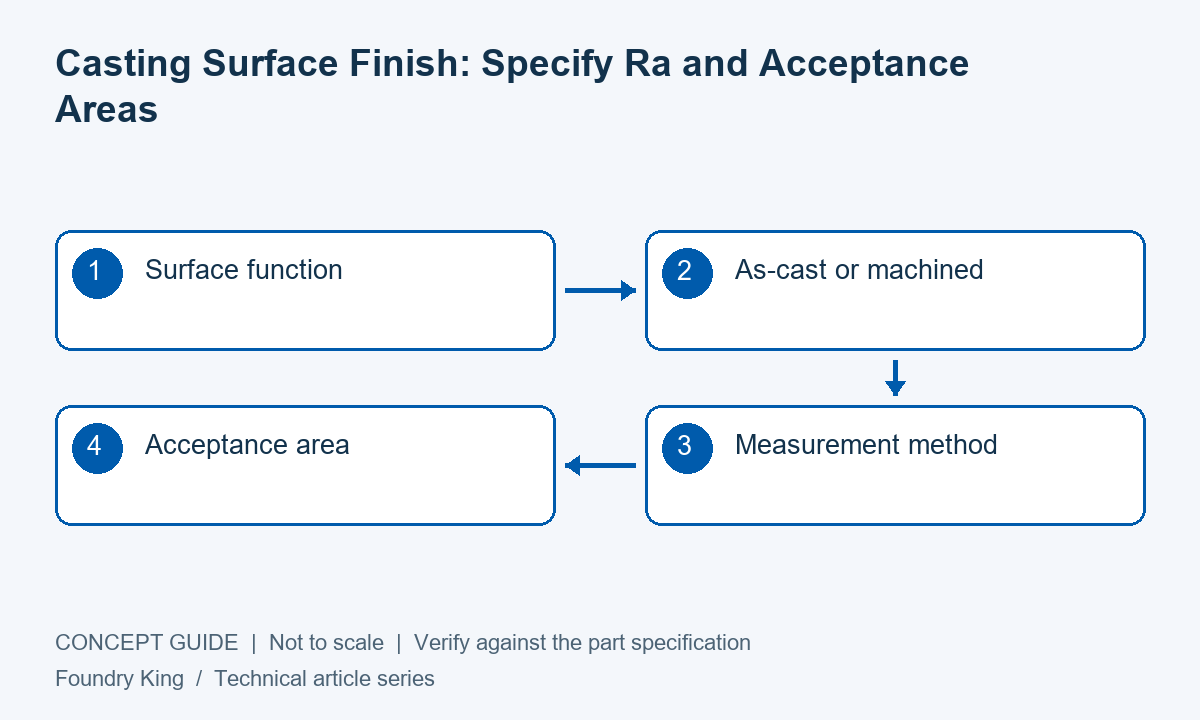
Separate texture from discontinuities
Surface roughness parameters describe aspects of texture over a specified evaluation arrangement. Visual quality includes other conditions such as adhering sand, gate witnesses, fins and local discontinuities. Dimensional tolerance is another separate requirement. These three categories should not be used interchangeably in a purchase order.
If a drawing specifies Ra, identify the surface, measurement approach and relevant conditions. A value without units or a clear reference can be misunderstood. Where a recognized visual comparator or customer sample is used, state its identity and the areas to which it applies.
Classify surfaces by function
A gasket face may be machined to a specified condition, while an external housing wall remains as-cast. An internal passage may need cleanliness and freedom from protrusions more than a decorative appearance. Apply the most demanding requirement only where it supports the component’s function.
Mark areas where blending and gate removal are permitted. A polished patch may look different from surrounding cast texture yet be acceptable; excessive blending may remove material from a critical section. Define both the visual expectation and any dimensional limit on finishing.
Review the route before promising a number
Surface condition depends on the alloy, mold material, process, geometry and cleaning. A general process range is useful for early discussion but should not become a guaranteed result on every feature. Ask the supplier to assess the actual drawing and, where needed, provide representative samples.
Machining can create a controlled functional surface, but it adds stock, fixturing and inspection. Compare that route with the cost and risk of demanding the same result as-cast. Sometimes a local machining operation is more practical than tightening the entire casting’s appearance specification.
Create an unambiguous surface schedule
| Surface category | Typical requirement to define | Verification approach |
|---|---|---|
| Machined sealing area | Texture, geometry and edge condition | Specified measurement and visual check |
| General as-cast exterior | Permitted witnesses and discontinuities | Agreed visual standard or sample |
| Internal flow passage | Cleanliness and allowable protrusions | Suitable accessible or internal examination |
Check final-condition effects
Blasting, coatings and chemical cleaning can change appearance and texture. Specify the stage at which acceptance is evaluated. A surface approved before coating may not show the same texture or reveal the same defects after finishing.
Retain the approved reference and ensure it is available to both supplier and inspector. If acceptance relies on a sample, identify which features it represents and what the drawing still governs. This prevents a visually appealing sample from overriding an essential engineering requirement.
Frequently asked questions
Does a lower Ra always mean a better component?
No. The required texture depends on the function, and other surface or internal defects may matter more.
Can a visual inspection replace roughness measurement?
It can assess defined visual criteria, but it does not automatically demonstrate a numerical texture requirement.
Discuss your component requirements
For related information, review investment casting surface considerations, or define a surface acceptance requirement. Include the drawing revision, alloy, quantities and critical acceptance requirements so the proposed route can be reviewed against the actual part.

Get Premium Casting Products
Join foundryking.com Newsletter to get more information of different premium OEM Casting products in China.


