

 By Coco
Make one approved information package the starting point for tooling, casting and machining.
A casting drawing release is the point at which a design becomes an instruction to manufacture. Sending a 3D file without a coordinated drawing can leave the foundry guessing about tolerances, material condition and inspection. A clear release package keeps casting development aligned with the finished component, particularly when several businesses handle tooling, heat treatment and machining.
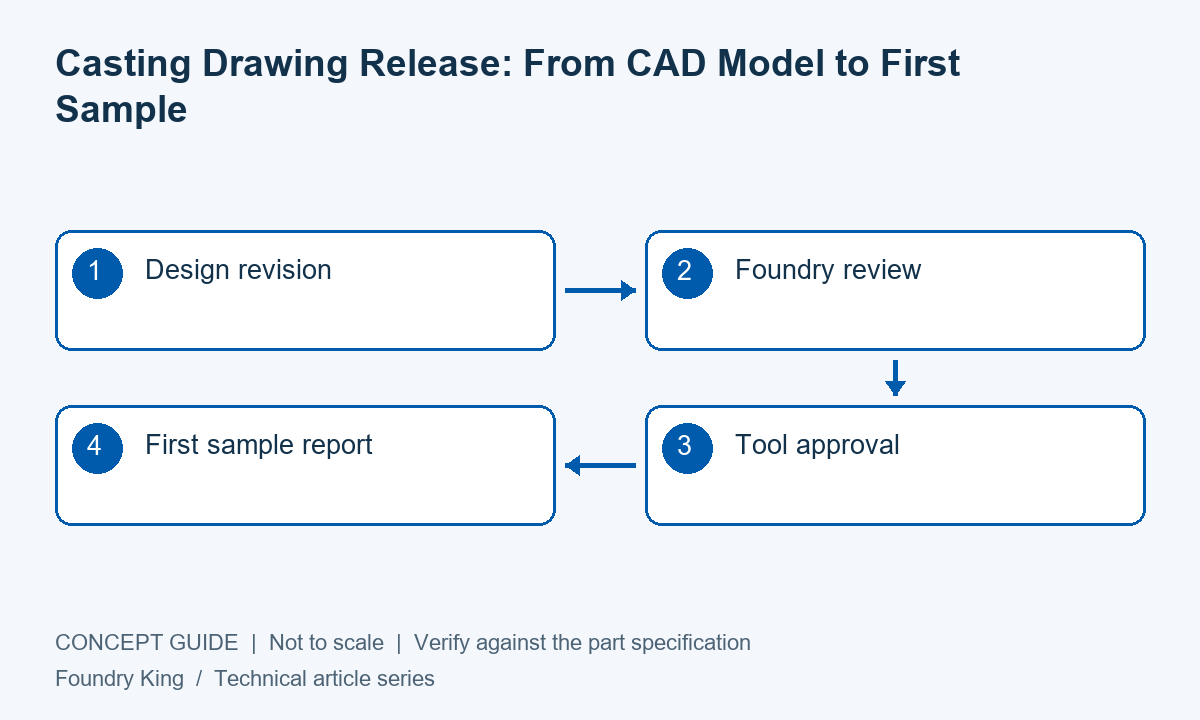
Identify the controlling design
Give every drawing and model a revision and confirm which document governs when information conflicts. The solid model may define nominal shape while the drawing adds tolerances, datums, surface requirements and notes. A supplier should not have to decide which of two emailed files represents the latest customer intent.
Include units and distinguish finished geometry from the proposed casting envelope. If the model represents a machined component, the foundry needs to add machining stock and process features in a separate, reviewable model. Preserve the relationship between these files rather than overwriting the original design with an undocumented manufacturing adaptation.
Mark functional features before tooling
List the features that locate, seal, rotate, carry load or connect to neighboring parts. This helps the foundry choose parting lines, gate positions and machining datums without damaging the intended function. A cosmetic surface and a fatigue-sensitive transition may need different treatment even when they look similar in CAD.
Where the drawing includes a demanding tolerance, discuss whether it will be cast directly or produced by machining. If the proposed route cannot reliably achieve it, resolve that issue before tooling approval. An inspection report cannot correct a design-to-process mismatch after the parts have been made.
Release requirements with the geometry
Material specification, heat treatment, testing and certification requirements belong in the quotation package. State relevant delivery conditions and identify any customer approvals needed for repairs or substitutions. Avoid phrases such as “all standard tests” because suppliers may interpret the included scope differently.
Where a requirement depends on an application code or customer specification, provide the applicable document and revision. The manufacturer needs the actual acceptance basis, not only the end-use industry. This also allows special examination or documentation costs to be included transparently in the quotation.
Agree the sample approval gate
| Document | Purpose | Release check |
|---|---|---|
| Finished drawing and CAD | Define final function and geometry | Matching revisions and units |
| Casting process drawing | Show allowances and manufacturing features | Customer-approved critical changes |
| Inspection plan | Define how conformity is demonstrated | Methods, coverage and acceptance agreed |
Use first samples as structured evidence
The first-sample package should identify the tooling, material and production route used. Review dimensions against agreed datums, record nonconformities and separate accepted deviations from unresolved issues. A part that assembles successfully can still fail a specified material or inspection requirement.
If changes are needed, issue a controlled action list rather than several disconnected emails. Confirm whether the drawing, tooling or process is changing and which measurements will be repeated. A complete record prevents a later order from restarting with an earlier, rejected design version.
Frequently asked questions
Is a STEP file enough to obtain a firm production quotation?
It may support an initial review, but material, quantity, tolerances, inspection and delivery condition are also needed for a comparable quotation.
Should the foundry change the customer model directly?
Manufacturing changes should remain traceable and approved. Retain the original design and identify any separate casting model and its revision.
Discuss your component requirements
For related information, review review cast component examples, or send a controlled drawing package. Include the drawing revision, alloy, quantities and critical acceptance requirements so the proposed route can be reviewed against the actual part.

Get Premium Casting Products
Join foundryking.com Newsletter to get more information of different premium OEM Casting products in China.


